Organic Rankine
Cycle.

Orcan Energy efficiency PACK modules that convert the heat your process is already throwing away into grid-quality electricity — no additional fuel, no additional combustion emissions. Four frames, two industrial and two marine, cover most duties.

Four frames in this category

Sized by how much heat
you actually have

The only question that decides between them is the thermal input available at your heat source. Everything else — integration, commissioning, service — is identical.

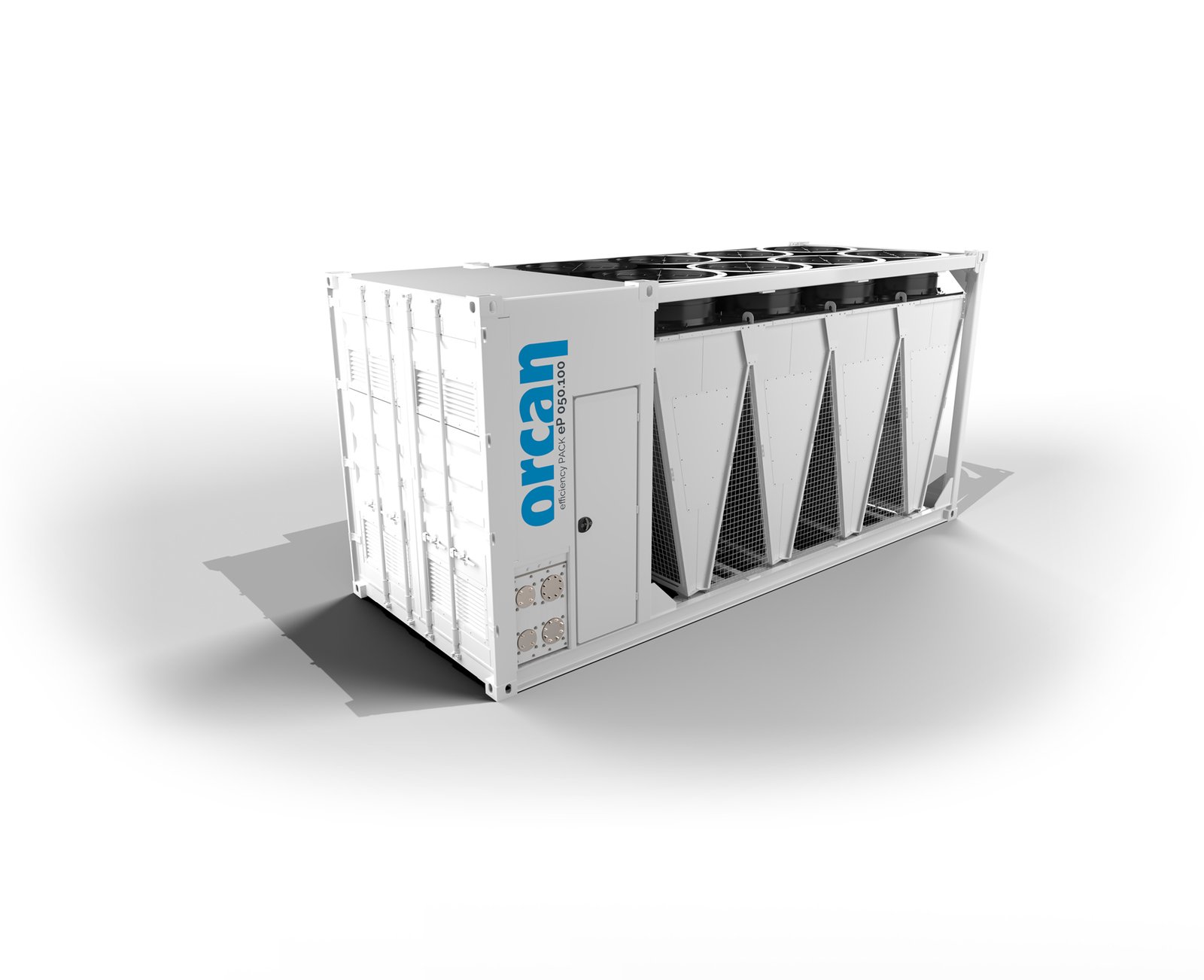
Industry & Power efficiency PACK eP 050.100

efficiency PACK eP 050.100

Designed for medium-scale operations — a balance of efficiency and versatility, ideal for manufacturing facilities and power plants. Fits into an existing engine container in minutes.

  • Input power500–1,200 kWth
  • Fluid heat sourceAbove 80 °C (ideal 140 °C)
  • Gaseous heat sourceAbove 150 °C
  • Dimensions6.1 × 2.5 × 2.9 m
View product →
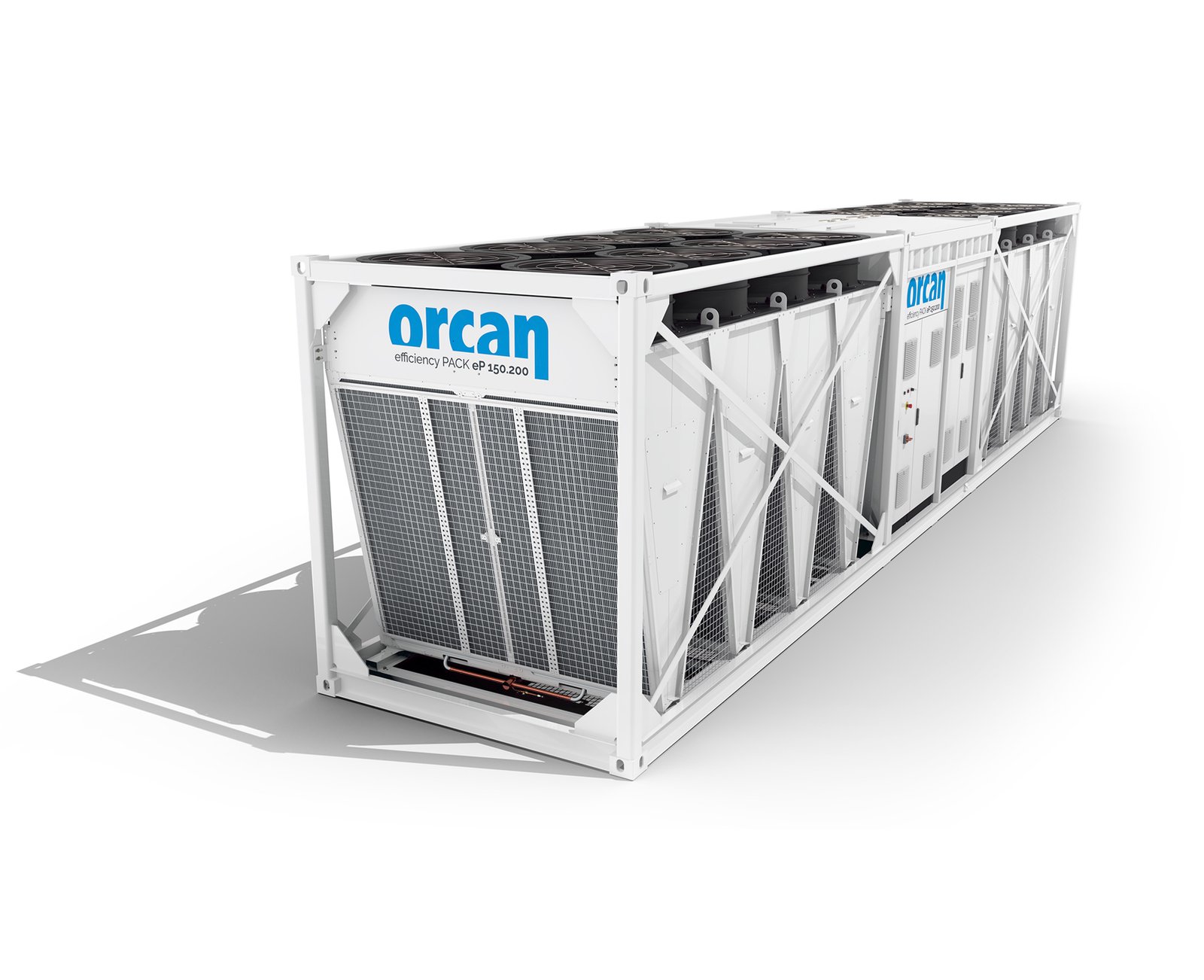
Industry & Power efficiency PACK eP 150.200

efficiency PACK eP 150.200

Ideal for larger-scale applications. Maximises electricity production from waste heat sources — suitable for heavy industries and continuous process lines.

  • Input power2 MW thermal
  • Fluid heat sourceAbove 80 °C (ideal 140 °C)
  • Gaseous heat sourceAbove 150 °C
  • Dimensions12.2 × 2.5 × 2.9 m
View product →
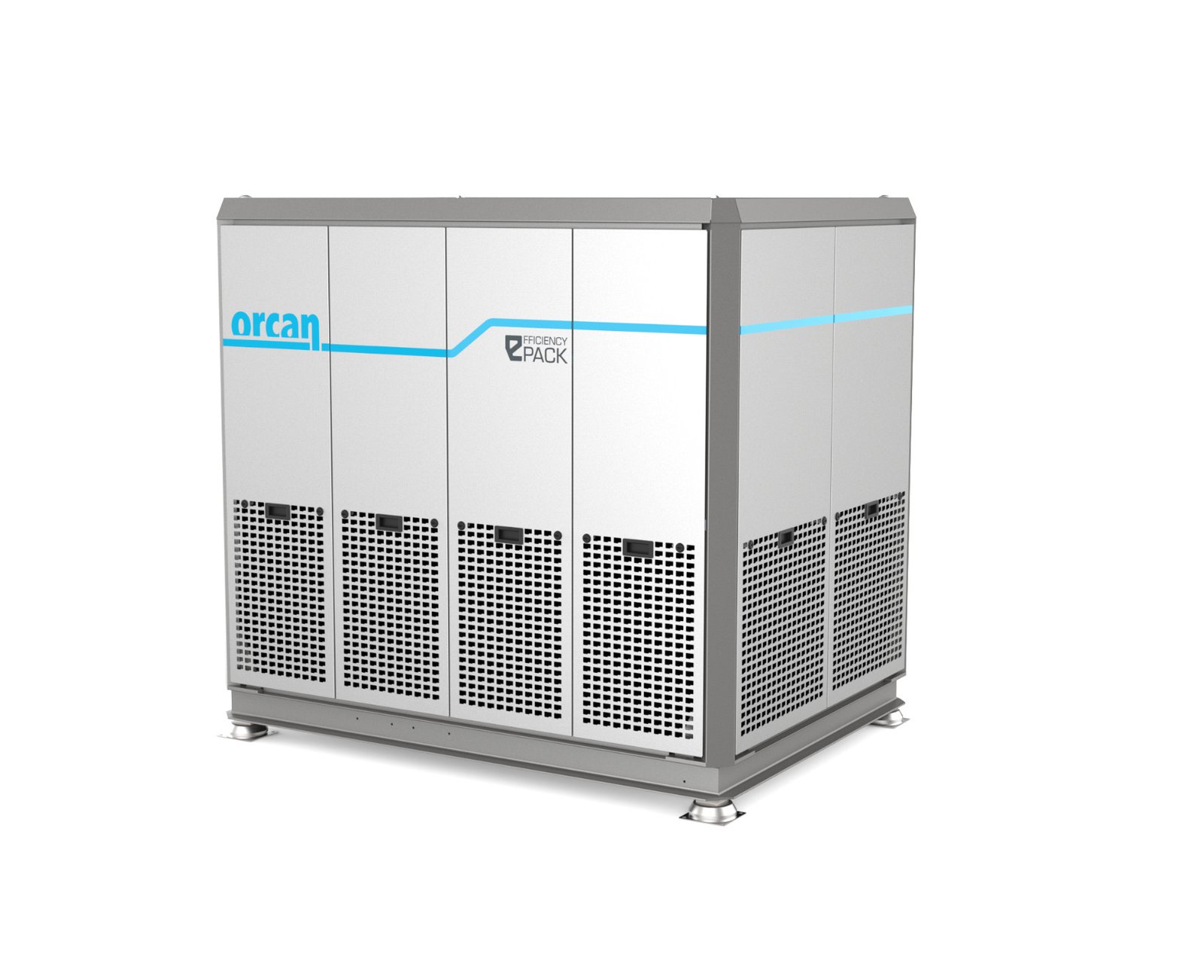
Marine efficiency PACK eP M 050.100

efficiency PACK eP M 050.100

The compact marine frame — sized for engines around 1 MW. Recovers a ship engine's waste heat into on-board electricity; suits new-build and retrofit.

  • Heat absorption560–1,100 kWth
  • DutyMarine
  • Dimensions1,096 × 1,396 × 1,982 mm
View product →
Marine efficiency PACK eP M 150.200

efficiency PACK eP M 150.200

The marine frame for larger ship engines. Very compact and easily installed, for both new-build and retrofit projects.

  • Heat absorption1,000–2,100 kWth
  • DutyMarine
  • Dimensions2,200 × 1,650 × 2,060 mm
View product →
Compare

eP 050.100 or eP 150.200?

Published manufacturer figures, side by side. Site-specific output is confirmed by a site survey — these are the selection inputs, not a performance guarantee.

Facts & figures — industrial ORC frames
SpecificationeP 050.100eP 150.200
ApplicationsIndustry & PowerIndustry & Power
Input power (per module)500–1,200 kWth2 MW thermal
Fluid heat sourcesAbove 80 °C (ideal 140 °C)Above 80 °C (ideal 140 °C)
Gaseous heat sourcesAbove 150 °CAbove 150 °C
Width6.1 m12.2 m
Length × Height2.5 × 2.9 m2.5 × 2.9 m
Additional fuelNoneNone

How the cycle works

Orcan Energy's solutions harness Organic Rankine Cycle technology to convert industrial waste heat into electrical power. This technology is critical in utilising low-grade heat sources, making it a pillar of energy-efficient practices.

An organic working fluid with a low boiling point takes heat from your stream, vaporises, drives a turbine, condenses and returns. Your process is untouched; the only thing that changes is that heat which used to leave the site now leaves as electricity.

Key benefits

  • Energy savings — significant reduction in energy consumption by harnessing residual heat.
  • Carbon footprint reduction — helps in significantly lowering CO₂ emissions.
  • ROI — quick return on investment through savings and operational efficiency.
  • Fast integration — fitted into an existing engine container in minutes.
Applications

Industries already running ORC

Our efficiency PACKs are versatile and can be integrated across a multitude of industries. These sectors benefit immensely from our ability to turn residual heat into energy, thereby optimising operational efficiencies.

01

Cement

Kiln and clinker cooler exhaust as a continuous, high-volume heat source.

02

Steel

Reheating furnaces and engine halls running around the clock.

03

Glass

Melting furnace waste heat recovered without disturbing the process.

04

Oil & Gas

Engine and compressor exhaust at remote and on-site facilities.

05

Power

Engine gensets where exhaust heat is currently vented to atmosphere.

Before you enquire

Common questions

Does an ORC burn any fuel?
No. The module converts heat your process already produces. There is no additional fuel input and no additional combustion emissions.
What if my heat is below 80 °C?
Then an ORC is the wrong tool and we will say so. At that grade a different recovery route usually makes more sense, and we'll tell you straight.
Can it be retrofitted to a running plant?
Yes. When integrated into an existing engine container the module can be fitted in just a few minutes. Retrofit is the normal case rather than the exception.
Who installs and services it in India?
Brio Energy Pvt. Ltd., as Orcan Energy's official India partner — covering supply, integration, commissioning and ongoing service.
Request a quote

Measure first.
Then buy the module.

Before any capex decision we size the recovery on your site and put a rupee figure and a payback period against it.